





Close

New Research from CDW Explores AI and Cybersecurity

Learn how AI is helping IT teams manage risk and improve resilience.

Oct 19 2026
Public Safety

Interoperability in Action: How Indiana and FirstNet Supported Texas Flood Search and Rescue Efforts

Nationwide public safety broadband kept responders connected across jurisdictions during a massive multistate disaster response.

In the aftermath of the catastrophic July 2025 flooding along the Guadalupe River in Central Texas, the hard work of recovery unfolded amid immense loss and destruction. Torrential rains transformed riverbanks into debris fields, damaged critical infrastructure and displaced entire communities.

As local agencies moved from immediate lifesaving efforts into sustained search and rescue, help began arriving from beyond the Texas border. Firefighters, law enforcement officers, emergency medical personnel, technical rescue specialists and canine teams from across the country converged on the region to assist with the devastating recovery operation.

Less visible — but equally essential to the response — was the ability of these responders to communicate seamlessly across jurisdictions, disciplines and state lines. For Indiana responders deploying into this environment, communications shaped the mission from the outset. Success depended not only on their skills but also on whether they could integrate quickly and seamlessly into a complex, multistate response.

Click the banner below for tips to upgrade physical security infrastructure.


Indiana Responders Deploy to the Flood Zone

Chief Jeremy Pell of the White River Township Fire Department in Johnson County, Ind., is no stranger to complex incidents. He’s served his community in public safety roles for over 35 years, including as a reserve sheriff’s deputy, K-9 handler, and fire chief for the past 18 years. He also serves as a board commissioner for the Integrated Public Safety Commission, which recently joined the Indiana Department of Homeland Security (IDHS) as the new Office of Emergency Communications. His role proved important when Indiana was asked to assist Texas through an Emergency Management Assistance Compact (EMAC) request — a formal mechanism for states to request personnel, equipment and resources during declared emergencies.

Chief Pell first learned of the devastation in Texas from national media coverage over the Fourth of July weekend, watching helplessly alongside the rest of the country. When the EMAC request followed a week later, the mission became personal. Given his experience in large incident command and his newly certified search and rescue dog Rosie, IDHS tasked Pell with assembling and leading a search and rescue team for deployment to Texas.

From the beginning, Pell knew one thing for sure: Effective communication would be critical. Search and rescue operations are inherently complex, requiring near constant coordination across difficult terrain, large groups and long hours. Considering this, Pell contacted the Director of the IDHS Office of Emergency Communications, Michael Watkins, to determine what communications tools the team could take with them to Texas.

Indiana’s Office of Emergency Communications and FirstNet

As Indiana’s governing body for public safety communications, the Office of Emergency Communications ensures that the state’s first responders can communicate reliably during daily operations and large-scale emergencies. The group oversees SAFE-T, the statewide 800 megahertz trunked radio system, and works to make communications assets widely available across Indiana. FirstNet, the nationwide public safety broadband network, is one of those assets.

FirstNet deployable solutions and broadband devices kept on hand by the Office of Emergency Communications can support responders in the state during special circumstances and situations where coverage gaps hinder response. With limited information about the Indiana team’s mission or the communications infrastructure they would encounter in Texas, flexibility was critical.

Ultimately, Watkins equipped the team with FirstNet resources, ensuring they could adapt to a wide range of conditions and integrate quickly into on-scene operations in Texas.
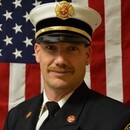

Chief Jeremy Pell
I don’t even know how to put into words how comforting it is to know that we can be 1,000 miles away and at the push of a button be able to contact a person that I know will help us if we need it.”

Chief Jeremy Pell White River Township Fire Department, Johnson County, Ind.

Deploying FirstNet Resources to Texas

Through the Office of Emergency Communications, Pell had access to Indiana’s 800MHz public safety radio network, which — when paired with FirstNet — could operate beyond state lines. This capability would allow the team to maintain real-time communication with partners back home while deployed hundreds of miles away.

The Office of Emergency Communications also provided radios, repeaters and other FirstNet-enabled devices from its inventory. Although Pell and his department were not FirstNet subscribers, the availability of these resources meant that the team could deploy on short notice with reliable, interoperable communications already in place.

That preparation eliminated a common friction point in multistate disaster responses: arriving on-scene and struggling to connect. Instead, Indiana responders arrived ready to plug into a broader communications ecosystem.

Ten days after the initial flooding, the Indiana team arrived at the Marble Falls Area Volunteer Fire Department — an agency that lost its own fire chief in the flood. The magnitude of the disaster was immediately apparent.

“Looking at the devastation, driving in, connecting with other first responders that actually lived through that event, and then going to the incident command post, were overwhelming,” Pell says. “It was nearly surreal. I’ve been involved in natural disasters, but it is always shocking to see how it impacts real people.”

At the height of operations, as many as 1,500 responders and approximately 75 canine teams worked along the banks of the Guadalupe River. Pell’s 5-person unit was embedded within a larger task force of 120 responders, including technical rescue specialists, EMTs, water rescue technicians, force protection personnel and ground searchers.

Pell and his team were able to communicate almost immediately despite the response’s massive scale and geographic spread.

Interoperability in Real Time

With FirstNet, the task force established unified communications quickly. “Doing this for as long as I have, I understand the challenges in getting that many people communicating, getting them physically together, and then keeping them working toward the same goal,” Pell says. “And FirstNet — it was vital in meeting that mission.”

Within 15 minutes of arriving, Pell’s team had set up communications with unified command and was operating on the same radio talk group as responders from multiple states.

That rapid integration allowed teams operating miles apart to remain connected. “I could talk to a Louisiana team, or an Oklahoma team, or a California team, and I didn’t have any questions of whether I could get help for myself, my team or our canines,” Pell says.

Click the banner below to learn more about protecting critical infrastructure.


That level of situational awareness in challenging terrain supported effective search and rescue, but also directly improved responder safety. “I was able to know exactly where people were and know that I had communications with them,” Pell adds.

That connectivity didn’t stop at the Texas state line, either. From the field, Pell maintained contact with IDHS. For the team, that connection to home provided technical assistance and a critical sense of support during long, emotionally demanding days, which topped 16 hours.

“I don’t even know how to put into words how comforting it is to know that we can be 1,000 miles away and at the push of a button be able to contact a person that I know will help us if we need it,” Pell says.

For this mission, communications served not only as an operational tool, but as a foundation of leadership, wellness and safety for Indiana responders.

READ MORE: How state and local government can prepare for natural disasters.

Communications Cannot Be Assumed

Drawing on decades of experience, Pell cautions against assuming communications systems will function automatically during disasters. To him, communications readiness is key to disaster preparedness.

“People just assume everything’s going to work when a disaster hits, and it’s actually quite the opposite,” he says. “It doesn’t work unless you have a nationwide network, and FirstNet is providing that.”

Over the course of his career, Pell has seen how communication gaps directly impact operations, remembering the limitations of earlier technology. “I started with just short-distance VHF radios, and it was limited by structure, ground, terrain and distance,” he recalls. However, as public safety communications evolve, broadband connectivity has transformed how responders make decisions.

“Probably the biggest change is the amount of data that we have in the field and the distance that we can reach, which often is based upon broadband,” Pell says.

With real-time access to data via tools such as FirstNet, public safety can get a clearer picture of their operations directly from the field. That readiness, as proved by Indiana’s deployment for the Texas floods, is essential to responders and communities alike.

As an Indiana native who has lived his entire life within a 50-mile radius of home, Pell sees deployments like the Texas response as an extension of the local service he’s dedicated his life to.

“I can lay my head down at night and know that I did hard work,” he says. “But in most cases, I made someone’s life a little bit better than it started.”

For him and his fellow responders, the Texas flood response demonstrated how interoperable communications are foundational to accomplishing that mission, whether at home or far from it. With the right tools, the Indiana team was able to deploy with confidence — equipped with the connectivity necessary to help the people of Texas when they needed it most.

For more information on the FirstNet network or the First Responder Network Authority, please contact John Hunt at John.Hunt@firstnet.gov.

Jaromir/Getty Images