Like many law enforcement organizations, the Norfolk (Va.) Police Department faced a staffing shortage in the wake of the COVID pandemic. At one point, the NPD was short about one-third of its typical staff count. This led department leadership to seek a technology solution to help increase the overall efficiency of its officers.
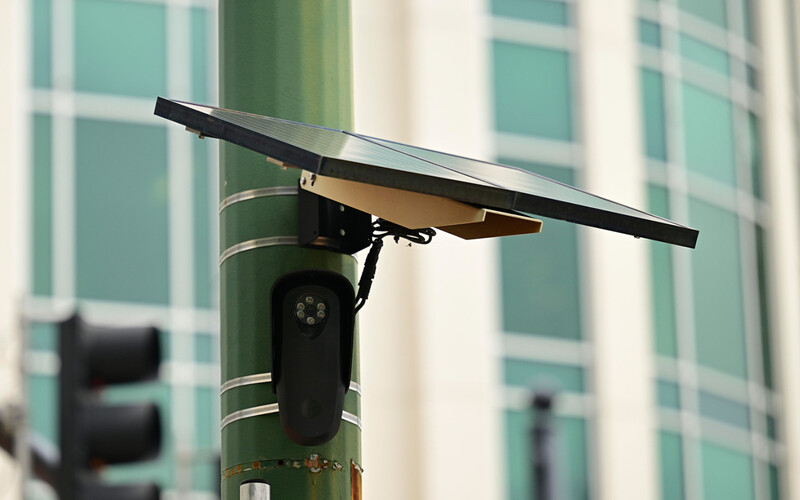
The solution started with the implementation of 172 Flock license plate reader (LPR) cameras to assist with an uptick in stolen cars, which in turn were being used to commit violent crimes. The success of the Flock cameras led to a wider technology deployment to deliver more efficiencies to NPD staff, ultimately resulting in the development of its real-time crime center.
The improved coordination and information sharing the NPD’s RTCC provides shows what’s possible when policing is augmented with technology. Rather than having information dispersed across multiple systems and databases, organizations can centralize access and provide support to staff, especially officers out in the community.
“Many agencies view RTCCs as a force multiplier because they can help personnel accomplish more with existing staffing levels,” says Brian J. Stults, a professor in the College of Criminology and Criminal Justice at Florida State University. “From a management perspective, RTCCs can also help agencies maximize the value of technologies they have already invested in by integrating information from systems that otherwise operate independently.”
Click the banner below for guidance on gaining insights from data stores.
Centralized access to information through an RTCC allows law enforcement officers to respond more quickly. RTCCs can access and act on relevant information while an incident is still unfolding rather than after the fact. Information that might have taken hours or days to obtain is often available in minutes with an RTCC.
“In addition to speed, RTCCs allow officers to focus on the tasks they are specifically trained to perform in the field,” Stults says. “Rather than spending time searching multiple databases or reviewing camera footage, RTCC analysts can provide support while officers remain focused on responding to incidents, interacting with the public and addressing immediate public safety concerns.”
Command Center Supports Gathering of Real-Time Intelligence
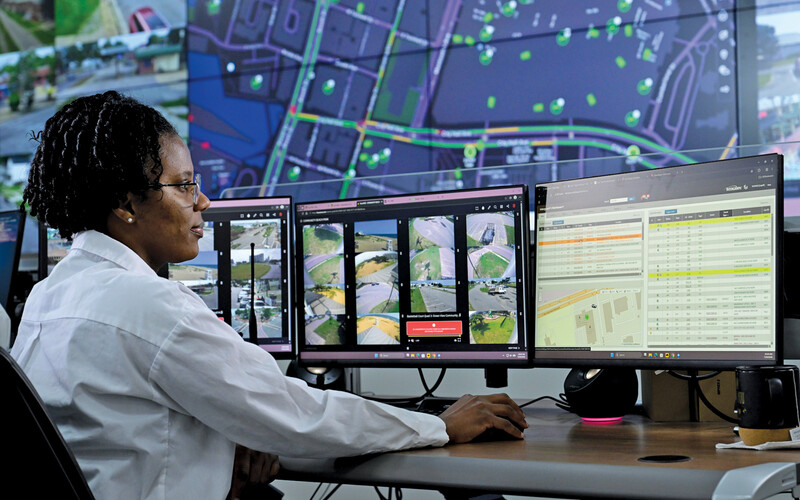
Located in Norfolk’s city hall, the NPD’s RTCC consists of several components, including a 15-by-5-foot video wall and consoles that staff and officers use to monitor video feeds and manage real-time information sharing with officers on duty throughout the city. The heart of the NPD RTCC is its Axon Fusus Real-Time Intelligence Platform.
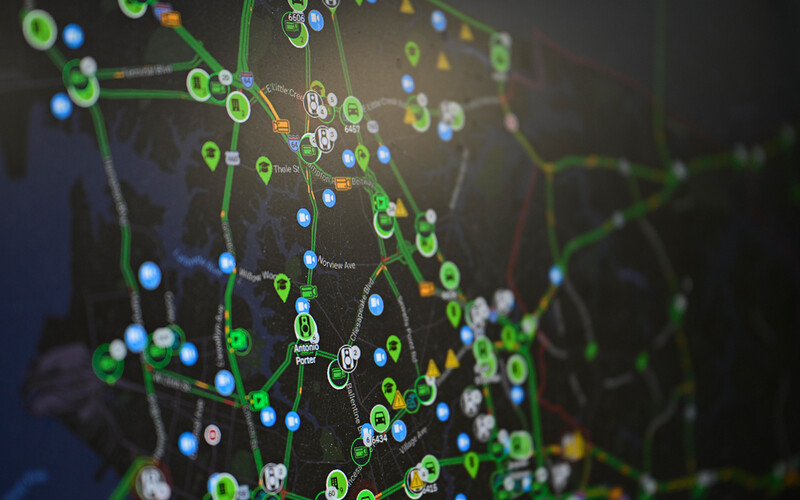
“Fusus integrates video feeds from different areas that use different video management systems into a single pane of glass within our RTCC,” says Capt. Mike Thomas with the Strategic Intelligence Division, Norfolk Police Department. “It provides us a map and shows us where all the cameras are. For the cameras that we have access to, it’s able to pull them up and show us what’s going on at that location in real time.”
In addition to the Fusus platform, the RTCC uses Peregrine Foundation to bring together different silos of data into a single searchable intelligence layer. Through a dashboard, it highlights pending calls for service, as well as any that came through over the previous 24 hours, providing a summary of events and prioritization based on the danger level. Other data inputs include officers’ bodycam feeds and a deployment of Axis Communications cameras in some of the city’s high-crime areas.
“We use it in violent crime responses to provide real-time intelligence to officers who are responding to calls for service,” Thomas says. “For investigations, we can follow up with evidence that we may have captured on a camera. Also, we have traffic cameras integrated into Fusus. For officers responding to a traffic accident at an intersection where we have a camera, we can provide a video of the incident itself when they arrive on the scene. They have objective video evidence showing exactly what happened.”
Integrating Data Sources Helps Solve More Crimes
The RTCC has delivered a variety of benefits to the NPD, including improved officer safety. Because body cam footage feeds into the Fusus platform, the RTCC has real-time access to officer activity, allowing staff to immediately provide additional support to officers if needed.
Video evidence captured by the RTCC has led to an increase in the solvability rates of violent crimes and property crimes. Placement of cameras in high-crime areas that connect to the RTCC feed has led to both a decrease in crime in those areas and an increase in the perception of safety among residents, who often praise the additional police presence.
“A violent crime reduction strategy isn’t based on just making arrests,” Thomas says. “It’s based on understanding the factors that led to the crimes, the motives, what is going on in that neighborhood. When you can see those interactions prior to a crime, from an operational perspective, it gives us intelligence we can use to then work to mitigate any future violence. It’s given us the ability to increase our effectiveness and efficiency as a professional law enforcement agency, which is critical to providing safety here in our city.”
Police Can Coordinate Activity During Major Events
The Glendale (Ariz.) Police Department’s RTCC has been operational since 2019. The GPD developed its RTCC as a means of bringing technology that was dispersed across their city into one central location.
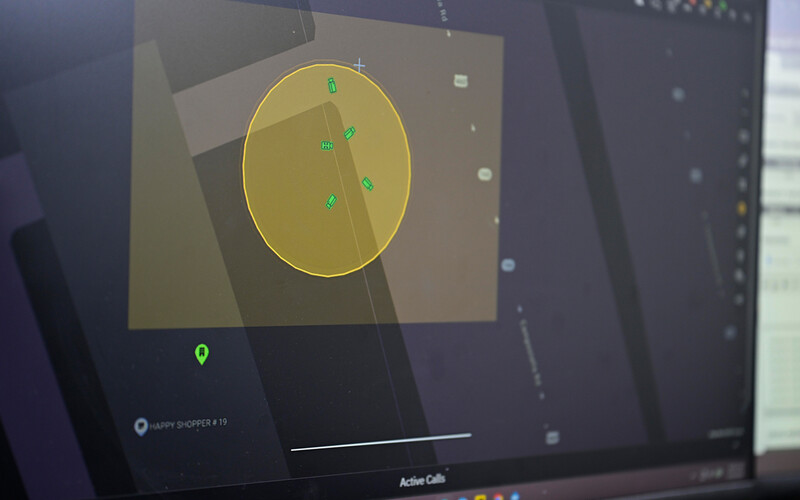
The foundation of the department’s RTCC is a Motorola CommandCentral Aware situational awareness platform that unifies real-time data and video while efficiently operationalizing intelligence resources. The platform provides quick access to various supporting databases that operators can search and analyze for relevant intelligence.
Additional RTCC components include workstations, a computer-aided dispatch system, an automated police vehicle locator, LPRs, drones and more than 1,700 cameras across the city.
“We use the RTCC to support priority calls for service as they unfold and to support follow-up investigations,” says RTCC Supervisor Sgt. Jonathan Clubb. “It equips officers with accurate and timely information as they respond to calls. Ultimately, RTCC resources increase the likelihood of suspect apprehension and case resolution.”
The RTCC also plays an integral role in GPD operations at State Farm Stadium, operating as a coordination hub during major events by integrating cameras, dispatch information, officer locations and drone data into a single operational picture.
The integrated technologies allow the GPD to manage public safety in ways it could not do previously. The tools put operators virtually on the scene prior to a call being dispatched. This allows RTCC staff to provide first responders with critical information about specific incidents and situational awareness ahead of officer arrival, enhancing the department’s investigative capabilities.
“Glendale’s RTCC allows officers to have accurate and timely information as they respond to a call for service,” Clubb says. “This yields a number of downstream benefits, including providing officers with video evidence of a crime — sometimes even before they arrive — and allowing resources to be redirected as needed if a suspect were to flee prior to officers’ arrival. It increases the likelihood of the department catching suspects who may have otherwise gotten away.”