Close

New Workspace Modernization Research from CDW

See how IT leaders are tackling workspace modernization opportunities and challenges.

Mar 24 2026
Data Analytics

Q&A: Water Resources Planning Adviser on How Mesa Uses Data to Strengthen Water Resiliency

Melody Zyburt explains how the Arizona city uses SCADA, AMI smart meters and regional partnerships to improve efficiency for its water utility.

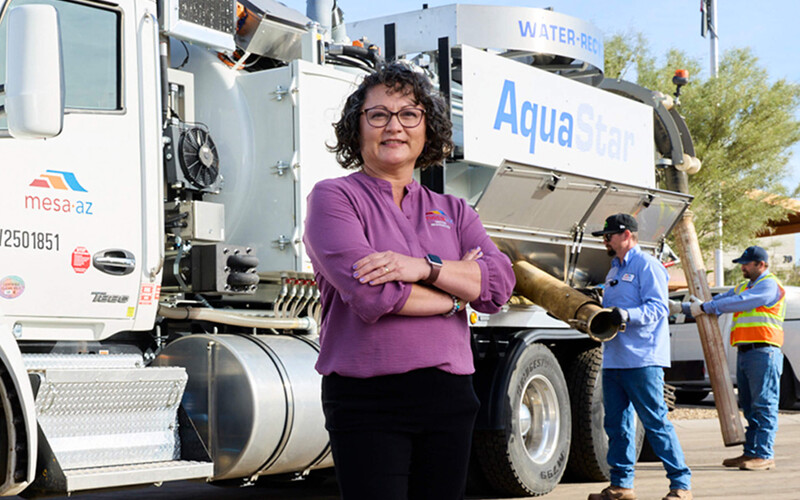
Melody Zyburt is the Water Resources Planning Adviser for the city of Mesa, Ariz., where she helps plan and manage the water supply for one of state’s largest cities. She has worked for the city for nine years, beginning as an engineer before moving into water resources and operations. Today, she focuses on long-term planning, overseeing Mesa’s mix of surface water, groundwater and regional water partnerships. She works closely with utility operators to keep the system reliable and efficient. The Water Resources Department reports up through the city manager’s office, making water planning a core municipal priority.

In an interview with StateTech, Zybert explained how smart city planning is important to the city’s water utility.

STATETECH: How does data and real-time monitoring factor into water planning and daily operations in Mesa?

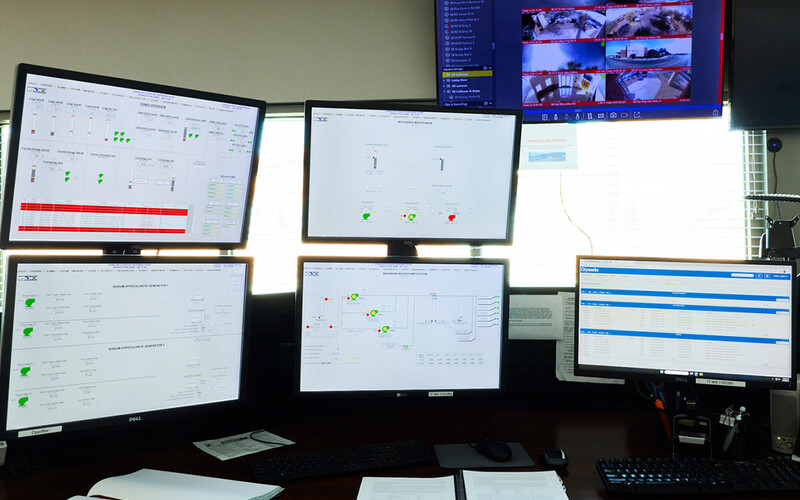
ZYBURT: We rely heavily on cascading SCADA (supervisory control and data acquisition) logic along with advanced sensors across both our treatment plants and our distribution system. This allows us to maximize operational efficiency and make real-time adjustments based on changing conditions.

For example, if we see a change in surface water availability, we may need to bring some groundwater wells online to maintain operational sustainability. We have live operators onsite who monitor pressure fluctuations and system performance in real time. If there’s a reduction in surface water supply, they can respond immediately by adjusting operations and adding well water as needed.

Click the banner below to weigh paths to improving citizen services.


STATETECH: Are these systems cloud-based, or do you keep operations internal?

ZYBURT: We keep everything internal. We’re not using a cloud-based system for these operations. Instead, we rely on internal programming software and live data screens that our staff are trained to use.

We have operators on duty 24/7, and at any time, there are at least two staff members monitoring operations across both the plant and distribution sides. They’re constantly watching pressure data and system conditions to ensure continuity of service.

STATETECH: Utilities often rely on legacy infrastructure. What challenges have you faced integrating newer digital tools into older systems?

Zyburt: One of the biggest transitions we’re working through right now is moving from traditional water meters to advanced metering infrastructure, or AMI smart meters. What we’ve discovered is that traditional meters — especially on the residential side — aren’t as accurate at lower flow ranges.

Melody Zyburt


As we install AMI meters, we’re seeing continuous-use notifications that simply weren’t captured before. These notifications often indicate leaks on the customer side of the meter. Since beginning the transition, we’ve seen more than 300 continuous-use notifications per month just from the new meters alone.

That’s required close coordination with property owners to help them identify and repair leaks on their properties. In the future, we plan to roll out a customer portal so residents can monitor their water use in real time, although that hasn’t launched yet. Overall, the transition has been eye-opening in terms of how much hidden water loss we can now detect.

READ MORE: IT agencies often own physical security responsibilities today.

STATETECH: Beyond metering, are there other smart technologies you’re especially proud of?

ZYBURT: One project I’m particularly excited about is our water recycling sewer-cleaning truck. This truck is used for sewer-cleaning operations, but unlike traditional trucks, it recycles water on board and removes solids.

Within the first six months of using this truck, we saved more than 1 million gallons of water. Traditional sewer-cleaning trucks rely on potable water, which is taken from hydrants and then sent directly to wastewater treatment after use. With this new truck, we’re reusing water instead of discarding it.

Once we reach the one-year mark, we’re projecting savings of about 2 million gallons annually from that single vehicle. It’s a great example of how targeted investments can have an outsized impact on conservation.

STATETECH: How does water infrastructure planning fit into Mesa’s broader smart city efforts?

ZYBURT: We work closely with other city departments whenever there are major projects underway. That includes transportation, parks and information technology. Because our water and wastewater infrastructure is typically located within roadways, we coordinate heavily with the transportation department during roadway design and construction.

When they’re planning a project, we look at whether we need to install new infrastructure, make repairs or replace aging assets, and we align our work with theirs. That coordination helps reduce disruption and improves efficiency.

On the IT side, the city maintains a fiber backbone, and we work with the IT team to extend fiber to our existing and new facilities whenever possible. Some of our facilities still rely on radio communications, so adding fiber significantly improves connectivity and operational visibility.

STATETECH: What outcomes do you use to measure success when adopting smart water technologies?

ZYBURT: One of our key outcomes is operational efficiency. Using SCADA, cascading control logic and advanced sensors has helped us reduce lost and unaccounted-for water across the system.

Citywide, our water loss is under 6%. For comparison, the national average is around 16%, and the Arizona state average is about 10%. That’s a strong indicator that we’re doing a good job keeping water within our system.

With AMI meters, our goal is to reduce continuous-use notifications over time. As more property owners identify and repair leaks, we expect those alerts to decline as the rollout nears completion over the next year.

We’re also using a tool called sewer AI, which allows field crews to conduct manhole inspections using a GoPro camera. The system generates 3D imaging and applies NASSCO (National Association of Sewer Service Companies) ratings automatically. That significantly reduces the time it takes to identify maintenance needs and eliminates the need to bring in consultants for initial assessments.

DIVE DEEPER: Enterprise service management can streamline operations.

STATETECH: AI is a major topic across infrastructure sectors. Where does it fit — and not fit — into water operations?

ZYBURT: We’re not using AI for SCADA operations, and that’s intentional. In large treatment plants, system reliability is critical, and during AI learning processes, systems can potentially go offline. We simply can’t afford interruptions to water treatment or service.

Data point


That said, AI has been extremely valuable in targeted applications like sewer inspections. With sewer AI, the system calculates NASCO ratings automatically, which used to require manual analysis by consultants.

We also use a program called InfoAsset Planner for water transmission planning. While it’s not strictly AI, it uses advanced algorithms based on criteria set by our engineers to assess risk across pipelines. That helps us prioritize inspections and maintenance more effectively.

STATETECH: Looking ahead, what major projects or milestones are on the horizon?

ZYBURT: One major project we’re completing this spring is the Central Mesa Reuse Pipeline. This is a partnership with the Gila River Indian Community. We invested more than $2 million in infrastructure to connect reclaimed water from our Northwest Water Reclamation Plant to their system.

Through this exchange, we’ll deliver about 10,000 acre-feet of reclaimed water to the community and receive approximately 8,000 acre-feet of highly valued Colorado River water in return. That project significantly strengthens our long-term water portfolio.

We’re also expanding the Signal Butte Water Treatment Plant. That project will be completed in summer 2027 and will double plant capacity from 24 million to 48 million gallons per day. We’re adding an 8 million-gallon reservoir and upgrading pumps to improve resiliency in southeast Mesa.

Beyond that, we’re continuing to focus on reducing water loss, expanding AMI deployment and strengthening regional partnerships so we can remain flexible in the face of ongoing drought conditions.

Photography by Steve Craft