






AI and Telematics Are Changing Road Maintenance
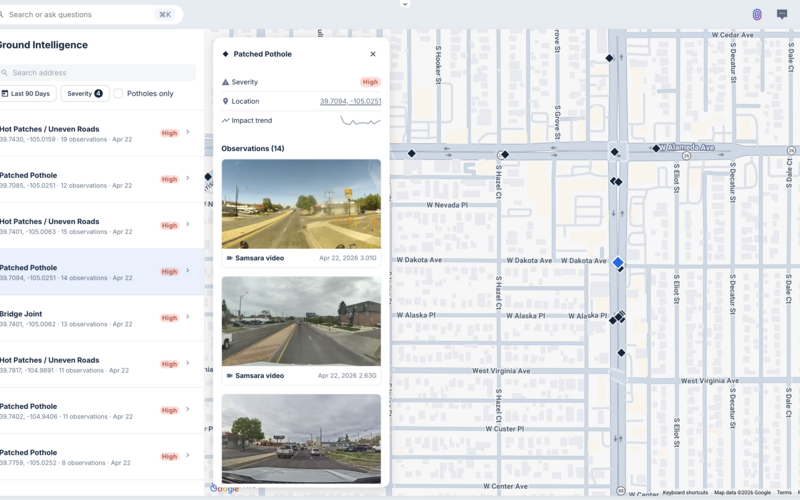
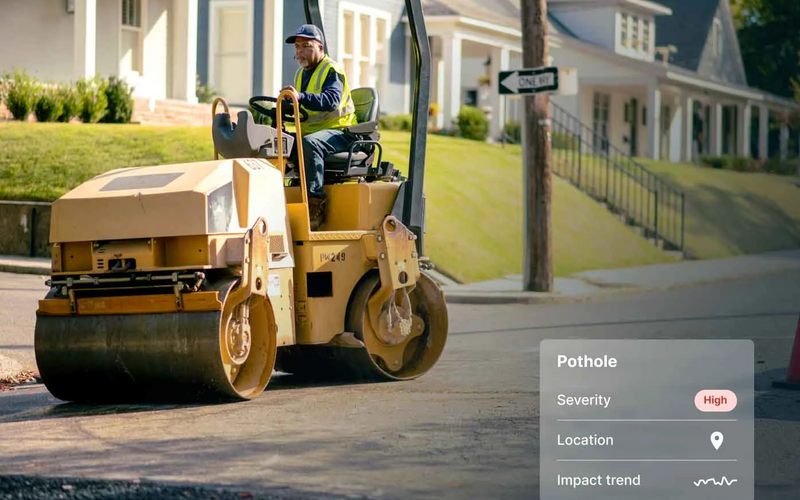
McClain’s agency is among those using Samsara’s connected operations platform to modernize public works operations. One of the company’s newest offerings, Ground Intelligence, uses vehicle-mounted sensors and AI-enabled cameras to automatically detect road defects as government vehicles drive their normal routes.
Instead of relying solely on residents’ complaints or manual inspections, agencies can use live operational data to identify potholes, cracked pavement and other roadway issues across entire service areas.
McClain says the visibility is especially important for smaller agencies working with limited personnel and resources.
“We’re relatively small on employees, so getting the most bang for your buck is super important,” he says.
Kalamazoo County is also using connected fleet technology to improve winter operations. McClain says the county previously relied on a largely manual process to track snowplow activity and route completion.
READ MORE: Local agencies explore video storage solutions.
Now, telematics dashboards allow operators to monitor truck locations, route coverage and material deployment in real time. Drivers can also see where peer crews are operating and self-dispatch more effectively during storms.
McClain says the county has reduced the time required to cover its road network after snow events from roughly 48 hours to between 24 and 36 hours.
The same infrastructure is also improving worker safety and accountability. McClain described a roadwork incident in which a motorist threatened county workers during a traffic-control operation. Dash camera footage captured the encounter and allowed the county to provide evidence directly to law enforcement.
“With our dash cameras, we can turn all of those recordings into the Sheriff’s Department,” McClain says. “They can handle it from there, and ultimately they can catch a lot of these people.”