




Close

New Research from CDW Explores AI and Cybersecurity

Learn how AI is helping IT teams manage risk and improve resilience.

Sep 17 2026
Networking

How State and Local Governments Build Reliable Networks for Self-Service Kiosks

Agencies are expanding resident access through wireless infrastructure, cloud management and distributed service delivery.

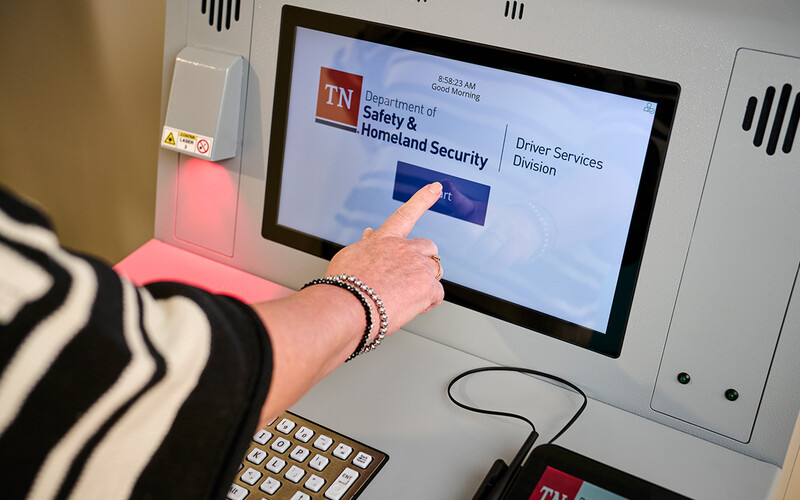
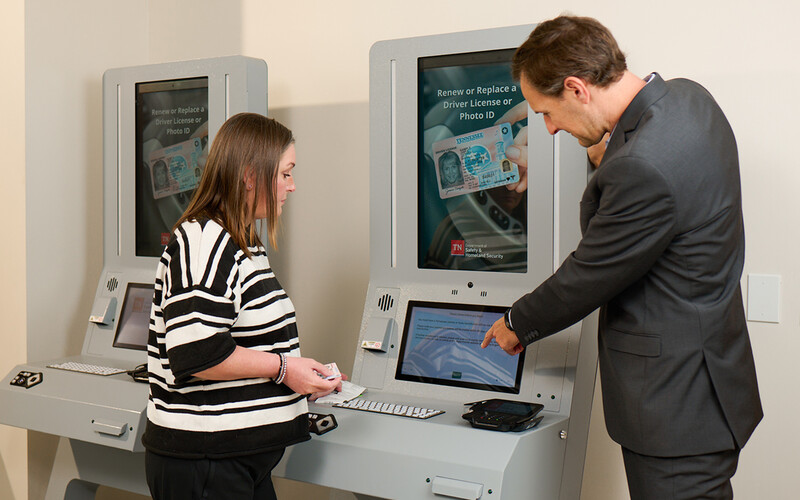
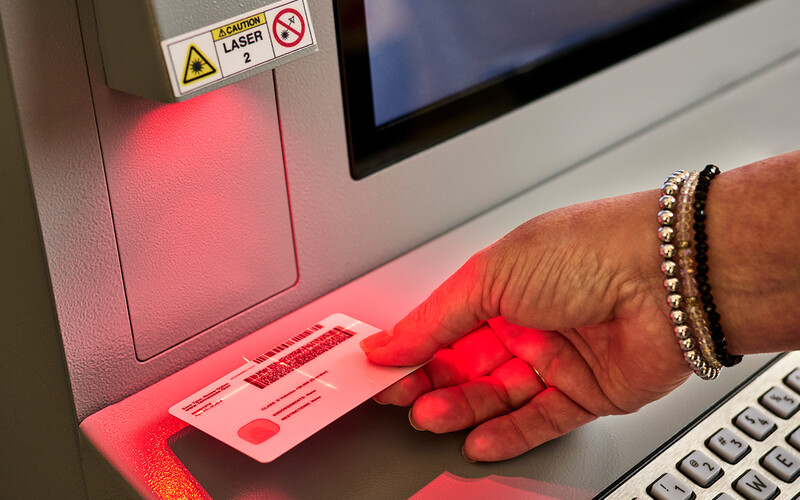
Residents can get a lot done in a government office. They can go to their local motor vehicles office to conduct routine business such as renewing driver’s licenses, updating their addresses or paying fees. Many people feel like that is time well spent. But in case they don’t, Tennessee offers an alternative to visiting the office with a statewide deployment of self-service kiosks.

“We saw that as a huge opportunity to try to address those simpler transactions,” says Matthew Drewes, executive IT director for the Tennessee Department of Safety and Homeland Security, which led the implementation.

Nationwide, state and local agencies are pivoting toward this model. And a strong field networking solution is essential to making it work.

“It needs to work really effectively on the user end,” says Richard Knepper, chair of the Coalition for Academic Scientific Computation (CASC) and director of the Cornell Center for Advanced Computing. “When you’re providing a service that citizens need, it needs to be bulletproof. It needs to be that much more capable and resilient.”

With kiosks in the field, “what does your signal look like? How does that happen? And does the speed of the transaction make that citizen happier or less happy?” Knepper says. “That network that you’re relying on has to be responsive and fast enough to do the things that you want it to do.”

Click the banner below for guidance on emerging networking technology.


Kiosks in Action

In Tennessee, convenience for residents is a prime consideration. Kiosks offer zero wait time, and they’re available outside normal business hours.

“We have driver service centers in 95 counties,” Drewes says. “If you can avoid that drive and go to your local library or somewhere else where there’s a self-service kiosk to complete a transaction, that sounds a lot more attractive.”

Beyond just the convenience factor, kiosks help restore confidence in government. “For most citizens, the only interaction they have with their state government may be when they go in and do something related to their driver’s license,” Drewes says. “If you get it right, everybody’s going to assume that the rest of state government is operating smoothly.”

READ MORE: States automate managing documents like driver’s licenses.

The West Virginia Department of Motor Vehicles has taken a similar route, with a dozen kiosks deployed statewide. “We have three street locations, eight in Kroger grocery stores, and one actually within a DMV office,” says DMV Executive Director Cecil Loyd.

“Currently we offer four services. We have vehicle registration renewals. We offer duplicate registration cards, your driver’s license ID renewal and a driving record,” he says.

One of the most common uses is print-on-demand registration decals. “People want to go get that decal right now: To go to Kroger, get my groceries, stop on the way out, get my decal and put it on my vehicle,” Loyd says.
Fielding the Network

In Tennessee, “we have put a huge emphasis on finding the right connectivity with hardware, carriers, antennas, all of it — and meshing that together,” Drewes says. “You can have super-awesome software, but if the connectivity is wonky or not working, guess what? You’re dead in the water.”

To that end, the state has deployed 180 Sierra Wireless routers, achieving an estimated 80% to 90% cost savings compared with traditional hardwired internet installations at each location.

The state wasn’t looking for just robust connectivity. “We were also looking for efficient connectivity,” Drewes says. “In the past, folks have thought of network services as copper and fiber. Today we think of network services as fiber, copper and wireless.

WATCH: Matthew Drewes explains his state’s drivers services kiosks.

The state contracts with three major carriers, “and I tell everybody: We’re not married to anybody, we’re just dating,” Drewes says. “That’s a healthy attitude. Those three carriers have gotten a lot more competitive with each other, trying to differentiate and continue to evolve those products.”

In West Virginia, kiosks are supported with equipment from Extreme Networks, Cradlepoint, Cisco and VMware VeloCloud (now part of Arista Networks). Beyond connectivity, this equipment also helps ensure the security of consumers’ financial information.

The kiosk doesn’t store any personal or credit card information. That’s transmitted back to the state via secure wireless, protected by both Cradlepoint and Cisco firewalls.

And the IT team is ever vigilant to ensure satisfactory network performance. “It takes a lot of monitoring and making sure that we have internet connections that are suitable and stable,” says Mike Ross, director of infrastructure in the West Virginia Office of Technology.

Matthew Drewes
If you get it right, everybody’s going to assume that the rest of state government is operating smoothly.”

Matthew Drewes Executive IT Director, Tennessee Department of Safety and Homeland Security

The Power of Partnerships

Tennessee worked closely with CDW to roll out its self-service kiosks for drivers.

With CDW’s help, “we looked at everything in the market, and we made a decision based on our existing footprint of equipment, our existing knowledge, the capabilities of the device, the price point, all of that,” Drewes says. “That is how we landed on Sierra Wireless.”

Throughout the process, “CDW has been a great partner. They have always provided excellent customer service, and they’ve been very competitive on the pricing,” he says. “If we’ve ever run into issues with particular devices, they’ve always been really great about very quickly and efficiently connecting us with the right people to troubleshoot.”

LEARN MORE: IT leaders should ask questions about cloud expenses.

The West Virginia DMV has likewise leaned on industry partners for support.

“To stand up managed equipment inside of a grocery store, that’s not feasible for us. We don’t control the environment. We don’t control the atmosphere or any access to the location,” Ross says. But a third-party partner can overcome those challenges and can also act as a force multiplier.

By tapping partners for assistance with the deployment and management of the kiosks, “it allows us to move to other projects and work on other issues that we have to solve. That’s one less thing that we have to worry about,” he says.

66%

The percentage of U.S. consumers who prefer self-service kiosks over staffed checkouts, citing speed and reduced stress

Source: pymnts.com, “66% of US Consumers Prefer Self-Service Kiosks Over Staffed Checkouts,” Sept. 18, 2024

Cloud Advantage

For state and local governments looking to stand up their own citizen-serving kiosks, it’s worth noting the role that cloud-based tools can play in support of an effective field network.

Drewes says cloud management of the Sierra Wireless equipment comes with multiple advantages, including the ease with which cloud delivers on security needs. “Keeping the devices patched up securely, updating firmware — all that can be done very easily at scale through the cloud management console,” he says.

A networking solution that can be managed via the cloud also delivers flexibility. “Assets get moved around. We might pick a location for a device and then determine it’s not the optimal location,” he says. “Through that cloud management console, we can literally see all the devices everywhere.”

Such considerations can help drive a successful deployment, and with a strong networking solution in place, kiosks can change the way residents interact with government.

Knepper has seen firsthand the impact of license plate renewals via kiosk. “You went to the mall and plugged in your information, and you had plate renewal on a Sunday evening if you needed it,” he says. “It was extremely convenient and very friendly.”

Photography by William DeShazer